
Frank Jones
An Irascible Newspaper Photographer With an Eye for History

Five old women stood stiffly in a group, trying hard to smile. From the looks of them in the picture, it didn’t come naturally. No one knows who they are or when their picture was taken, though the style of their evening dresses suggests the late 1950s. Their picture and thousands of others that Frank Jones took during his almost 40 years as a newspaper photographer in Winston-Salem form the backbone of what may be the best photographic record of a North Carolina city. The old women, Jones knew when he took their picture, would one day be part of history.
One imagines the women as coming from the city’s finest families. Maybe they were attending a charity benefit, a music recital, or a fancy wedding. Whatever the occasion this much is certain: Frank Jones insulted them, and they loved him for it.
“I guess he is THE Journal character,” said the late Roy Thompson, a friend and fellow worker at the Winston-Salem Journal for many years. “Jones was a genius. He was a whiz with the camera and knew all kinds of things, except when to keep his mouth shut. He could be remarkably outrageous.”
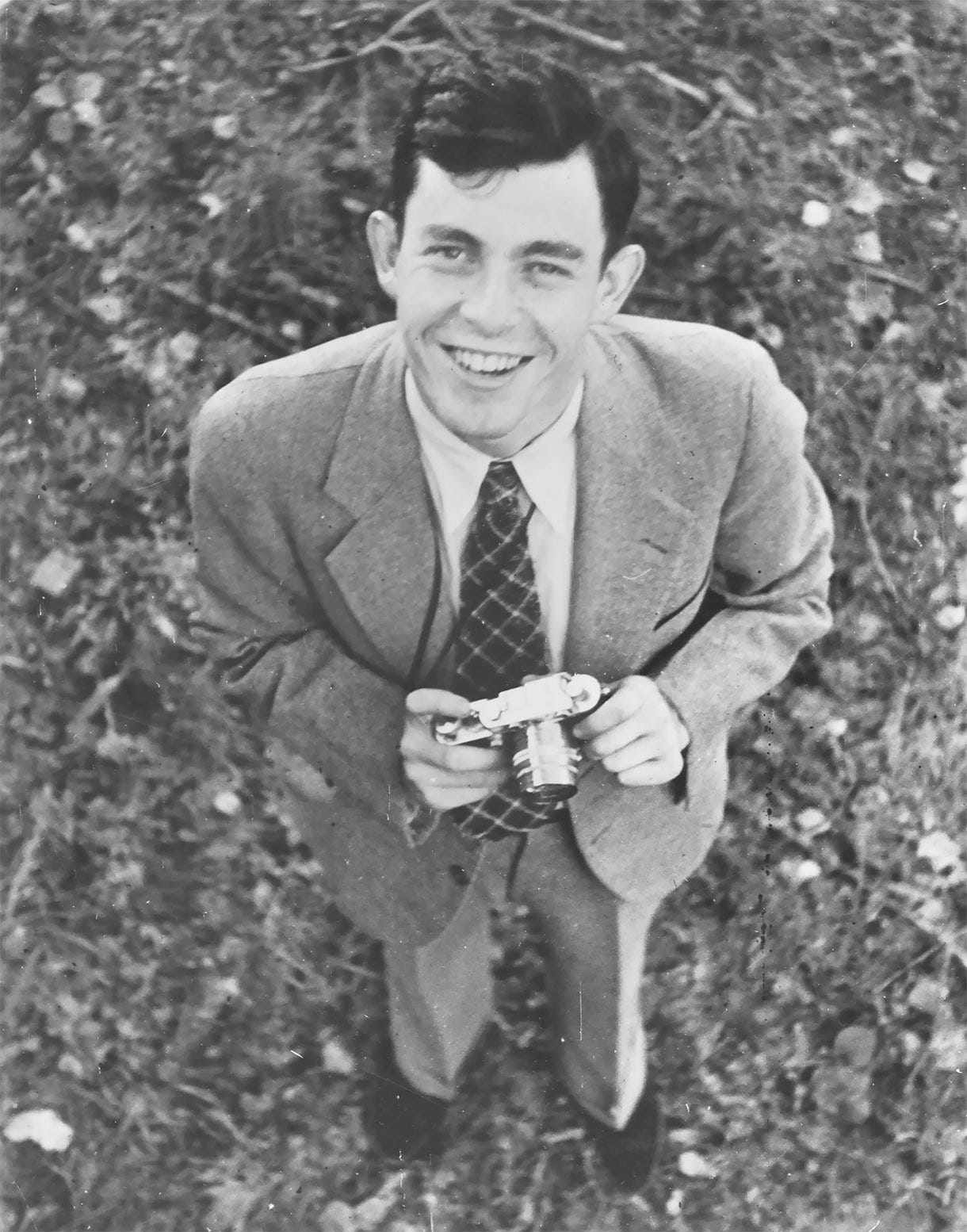
Thompson, a reporter at the time, remembers a banquet of the Women’s Christian Temperance Union in the late 1940s that he and Jones covered for the Journal. Jones behaved until it was time to take the obligatory photograph of the group’s officers. “Jones lined up three or four officers, and they were classic caricatures,” Thompson remembered. “He looked at them and he arranged them this way and he arranged them that way. Finally, he said, ‘All right, girls, everybody stand shoulder to shoulder, bellies in, boobs out, smile.’ He took his picture and was gone, leaving me with them.”
Such a remark in those Puritan times, coming from any other newspaper employee would have elicited a call to the publisher’s office. It was expected of Frank, though.
A Winston-Salem native, he had joined the Journal in 1937 as its first photographer and had spent the years sharpening his photographic skills and his tongue, while acquiring a reputation as a crabby cynic who delighted in showing important people just how unimportant they really were. Gen. Dwight Eisenhower crossed paths with Frank in 1952 while on the campaign trail for the White House. The man who won World War II stopped in Winston-Salem, and Jones was dispatched to the Hotel Robert E. Lee to get his picture. Eisenhower asked Jones to wait while he combed his hair. Jones watched him fumble around in his pockets for a while and finally offered his comb to the general. After Ike returned the it, Jones made a great show of cleaning the comb.
Generals, mayors, dowagers. No one was immune. Jones made it his role in life to needle and shock them, and to do it with style and flair. “He wanted to be a character and he was a raging success. He worked at it,” said Bill Ray, who was a photographer with Jones for 30 years. “He couldn’t have been that good if he hadn’t of worked at it. He’d say things to shock people, and they’d grow to like it.”
Almost everyone who knew Jones had a story. Thompson tells another about the woman they both knew who bent down one morning to open her garage door, heard something pop inside her mouth, and when she stood up she couldn’t talk. She ended up in the hospital, and Thompson smelled a story. “It occurred to me that a woman who couldn’t get her mouth open was worth writing something about,” he said. Jones was assigned to take the woman’s picture in the hospital, and the patient feared that he would insult her two maiden aunts who would be visiting when Jones arrived. She begged Thompson to talk to Jones. “That makes him worse,” Roy replied.
Thompson pulled Jones aside, when he arrived a few minutes after the aunts, and explained that the old ladies may not understand Jones’s sense of humor and asked him to be on his best behavior. Jones said he would, but Thompson had his doubts. Smiling and polite, Jones took his pictures and put the used flash bulbs in his pocket. He thanked the woman and left with Thompson. They got a few feet down the hall when Jones said that he forgot something. Back in the woman’s room, he dropped the used flash bulbs in the her lap. “Honey,” he said, “the next time they come around with the bedpan drop these in there. You’ll have them torn up over here for a week.”
Jones’s eccentricities extended to his appearance, as well. Having visited Russia, Central America, and Europe, he considered himself a world traveler and liked to dress the part. He was particularly fond of Mexican serapes, Russian fur coats, Guatemalan belts, and campaign buttons for candidates long dead.
The gruff exterior encased a soft heart. On those stories about families burned out of their house, Jones would arrive with candy for the kids. Then, he’d sneak back later with a bag of groceries or a load of clothes. “He gave an appearance of being tough and rough but in fact he was kind hearted,” said Fred Flagler, a retired Journal and then Sentinel managing editor.
Flagler also noted that on the job, Jones was all business. “He was a great news photographer,” Flagler said. “Take a hurricane. He’d go and have prints on your desk for the next day. It was just amazing. There was a lot of horsing around but when the fire bell rang, he was ready to do the job.”
Fearlessness also was a Jones trademark, Thompson noted. “He was unquestionably was one of guttiest people that I have ever encountered. While covering a hurricane in Charleston, he got out in the street to take pictures of roofs blowing off buildings and boats washing down the street,” he said. “He was afraid of nothing and he stood in awe of absolutely nothing. If there’s a God and Jones ever gets near him, God will have to be on his Ps and Qs.”
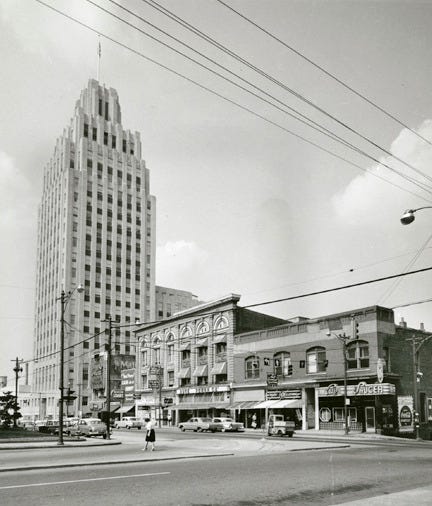
Jones didn’t shoot pictures only for the newspapers. “The thing about Frank Jones that impresses me more than just about anything else is he shot for history on a daily basis,” Ray said. “I would give anything if I had done that, but I didn’t do that. I was too busy getting that front page photo. He made pictures of building and streets and things that were going to gone, and a lot of them are.”
He saved the negatives of almost every picture he ever took, and he began collecting old photographs of Winston-Salem. “I’ve always been more interested in the past than in the future,” Jones said in 1966. “Unless somebody collects these old photographs, there’ll be no visual record of what went on in the past. I just took it upon myself.”
Suffering from leukemia and a heart condition, Jones was at work on the evening of Feb. 20, 1975, when he collapsed on the floor of the photo department. He was pronounced dead at the hospital.
A bachelor, Jones gave his massive collection of photographs to the Wachovia Historical Society, which eventually donated them to the Winston-Salem/Forsyth County Public Library.
It took library officials almost 10 years to finish cataloging the pictures. Some of Jones’s fellow photographers at the newspapers later added to the library’s collection by donating their pictures, making the Photographic Collection one of the most extensive community archives in the state.
The past met the future when Jones’s photographs were digitized, and library patrons now can view them online. Many of the people in the images still are unidentified, but rest assured that Frank tweaked their noses while took their pictures.
When I was hired at the Journal in 1973 Frank welcomed me to the staff. With a couple of other staffers present in the darkroom he said, “We looked at your work and decided you are not a threat.”
Terrific read. The Journal had an excellent photo staff for a long, long time. I have a Howard Walker piece on my dining room wall.