
Floyd Rogers
A Mentor Who Shouldn't Bow Out So Quietly

I’ve reached the regrettable stage in life when older friends die with increasing regularity. It can be very depressing to be constantly reminded that the game clock is winding down. I assume I will get used to it.
I was particularly bummed out last week when I got word that Floyd Rogers had died in October in a nursing home in Yadkinville, NC. He was 82. I can count on one hand the number of people who mentored me, who took the time to coach and prod me, who helped make me the journalist and writer I became. Floyd was one of them.
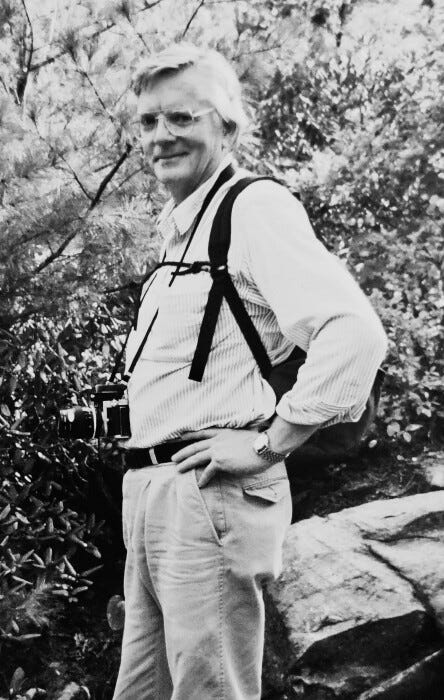
He was a gifted writer, a hawk-eyed but understanding editor, and a first-class newsman who valued a well-crafted story. He shouldn’t be allowed to leave this world so quietly. Someone needs to remember. It’s the only way we can live on.
Floyd grew up in the shadow of Berry’s Mountain in Moravian Falls, among the misty hills of southern Wilkes County, which left him with an abiding taste for good corn whiskey, an appreciation of North Carolina’s natural beauty, and a backwoods, iconoclastic view of life. Almost everyone and everything were considered suspicious, not a bad quality for a budding journalist.
He went off to Chapel Hill and returned home with a degree in journalism, hiring on with the local Journal-Patriot, a small daily in North Wilkesboro. As a J-school graduate, Floyd had been recruited by the state’s major newspapers, but he thought it important to go home and work for a smaller paper where he could learn the business from the ground up.
By 1972, he was ready to move on. He traveled the 50 miles down US 421 to join the Winston-Salem Journal, then one of the largest and most-respected dailies in the state. On a staff of seasoned, talented journalists, Floyd distinguished himself over the next 15 years as a hard-nosed reporter who wrote provocatively about a wide-range of weighty social subjects — the burgeoning cost of health care, the widening achievement gap between black and white students in public schools, the city’s crumbling infrastructure. His stories about the solidifying scientific links between cancer and cigarette smoking didn’t endear him in the board room at R.J. Reynolds Tobacco Co., Winston-Salem’s largest employer and most-important benefactor. Floyd wore the company’s displeasure proudly.
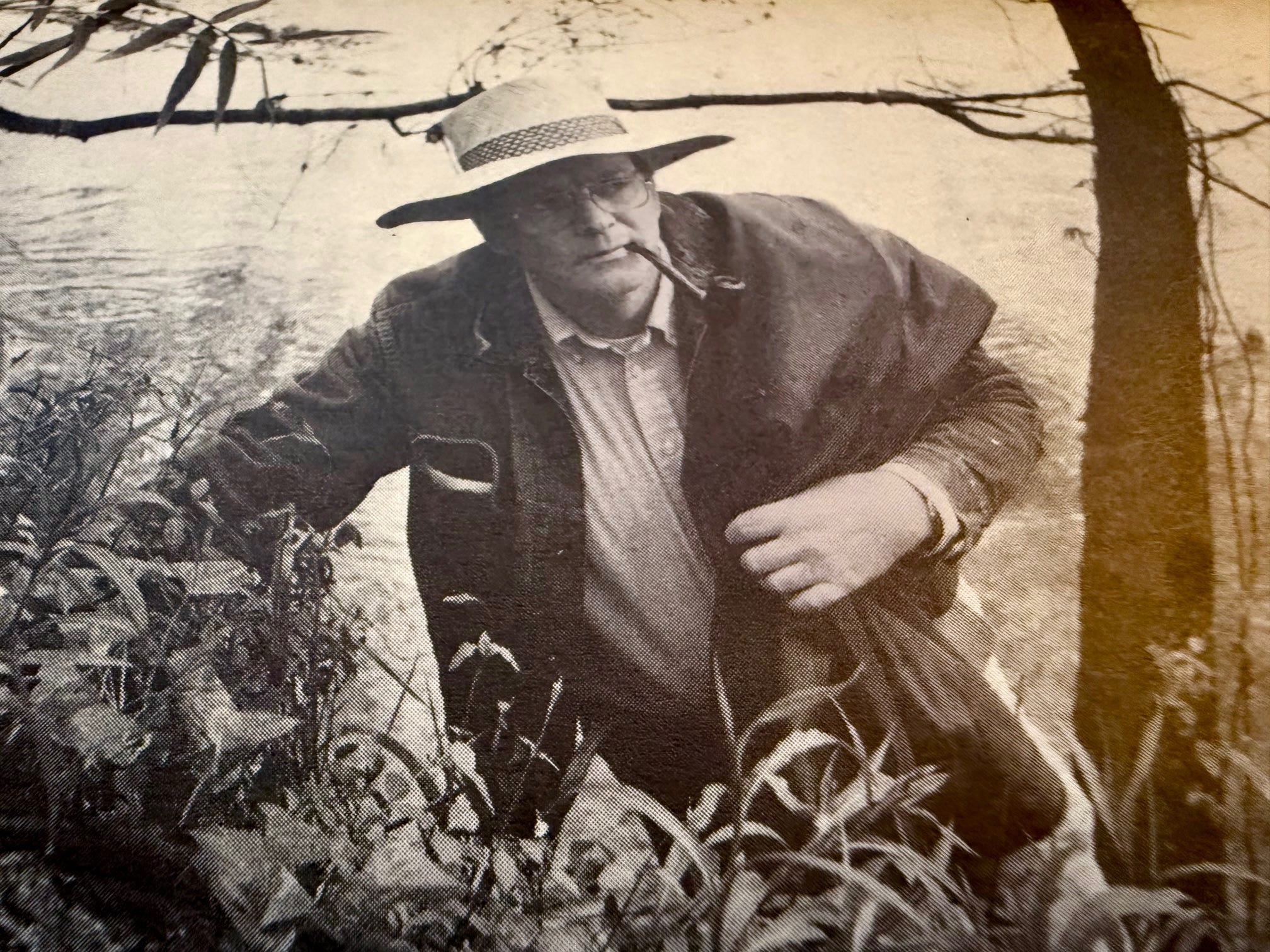
For all that, he won a passel of writing awards, but the most impressive came in 1982 when the Scripps-Howard Foundation gave Floyd its Edward J. Meeman National Environmental Reporting Award for his series of stories about the Yadkin River. He paddled 400 miles down the muddy ol’ Yadkin, from its source near his home in Wilkes to the sea at Georgetown, SC. As a boy, Floyd fished the river for its legendary catfish, using “grampers” as bait. Known as hellgrammites by city folk, grampers are the larvae of a large insect, the dobson fly, and cling to rocks at the bottom of the river. “Fishing for catfish in the river was really pretty easy in those days,” Floyd once told me with a sly grin. “They would jump into your boat to get at the grampers bucket.”
He infused his Yadkin stories with those kinds of memories. He talked to the people who lived long its banks. He explained its geology and archeology and described its cultural and historic importance. “I regard Floyd as a modern pioneer,” Gov. Jim Hunt wrote in the preface of the book, Yadkin Passage, that the series later became, “not exploring new ground in a physical wilderness, but exploring territory on behalf of those who must hear the message of our state’s natural resources. By traversing that old ground that was once wilderness, he has brought us close to the elements as our ancestors were. He has brought life to a subject that is so vital to our lives. And to a mute river, he has given a voice.”
As a Journal copy editor, I admired the stories for different reasons. They were the works of a master, each one carefully crafted and beautifully written, every word properly chosen. They combined to evoke deep passions, memories, and feelings. That’s how it should be done. Newsrooms usually taught their reporters through osmosis. Floyd was showing us the way if we cared to follow.
I did, quite literally. I had been lobbying Journal editors to leave the copy desk and return to reporting. Floyd provided the opening when he became assistant state editor in the mid-1980s. I moved into his job as the paper’s science and medical reporter. Floyd became my boss a few years later when he was named city editor and put in charge of a large swath of the newsroom.
Many reporters chaffed under Floyd’s leadership. He could be blunt to the point of being brusque, and his barbed criticism of stories sometimes left their authors bruised. Above all, he wanted good stories and was willing to give wide leeway to his reporters who could deliver.
Floyd allowed me to reach my full potential as a reporter and writer by letting me follow my interests and trusting in my nose for news and in my ability to turn it into a good story. I wrote about that state’s environment and nature. I profiled its interesting people and tracked the hurricanes that ravaged its coast. Floyd would usually have to send a helicopter to retrieve me. Some of the stories took weeks and months to complete. Floyd made sure my schedule was cleared. I sometimes wondered whether other reporters envied that freedom, but I knew if they dared complain Floyd would have my back.
By 1995, it was becoming clear that daily newspapering in Winston-Salem and most other places in America was becoming unprofitable and untenable. The staff was being cut and the newsroom was being reorganized. Never one to suffer fools quietly, Floyd abruptly quit. The paper’s owners, following the suggestions of consultants, changed the newsroom’s structure, and the position of city editor was abolished. Floyd, then, was the last person to have the job.
He went back to his workshop in Moravian Falls where he turned exquisite wooden bowls and designed and built handsome furniture. Later, he added gunsmith to his resume.
He became something of a hermit, slowly going deaf. He turned up for the occasional funeral or posted cryptically on Facebook. I tried to reach him a couple of times this year at the phone number I had, but the message went to voice mail. He never returned the calls. I feared the worse.
I owe Floyd a lot, though I never thanked him. That’s probably a good thing because he would have condemned it as sentimental claptrap.
Very sad news. I always enjoyed shooting Floyd’s stories, which were guaranteed to be populated by unique and fascinating characters like the improbably-named Dr. Cato Hollar, a lanky caver from Wilkesboro who led us down the dark and twisting passages of an un-named cave near the Georgia state line. I enjoyed Floyd’s wry wit, keen intelligence, and unpretentious manner. He always treated me as a real colleague, not simply “his photographer.”
Thanks for this tribute.
Yes, he would have! Thank you for summing up Floyd so very well. I always appreciated his trust, his light hand and sage advice when editing, and his grumpy but lovable old self! Your tribute really brings him to life, Frank. He was one of the greats.